

Perceptions on donkeys need change –Vet Experts
- By Zimpapers Syndication |
- 07 Jan, 2026 |
- 0
Sifelani Tsiko ---
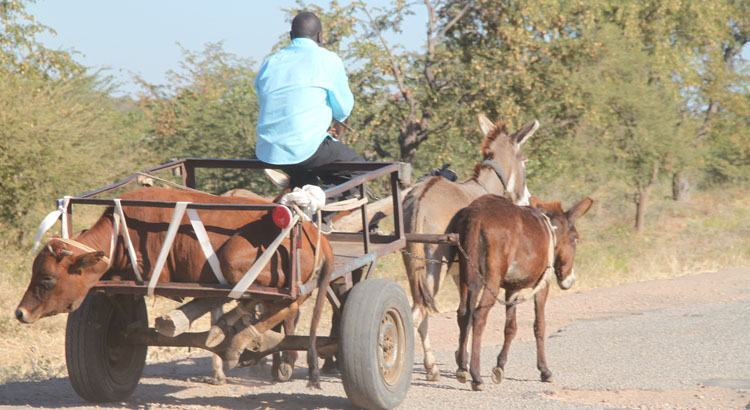
Zimbabweans need to change their attitudes towards donkeys and embrace the protection and care of the working animals which have been at the centre of rural economic growth and development for decades, veterinary experts say.
Animal and Wildlife Area Research and Rehabilitation (AWARE), director, Dr Keith Dutlow told Zimpapers Syndication at an event to open an education centre for children at the Lion Park in the capital recently that even though donkey use is wide spread and extensively adopted in many communities across the country, their use has been masked in negative perceptions and attitudes.
“Donkeys play a significant role in the livelihoods of local communities especially in arid regions, where conditions are harsher. But our perceptions towards donkeys is still negative,” he says.
“Those who use donkeys are seen by their peers in society as primitive, backward and people of low status. Even among the donkey owners and users, the donkey image is not to be held highly and as a result they abuse and mistreat them in the process of working the animals.
“We need to change our perceptions and appreciate the economic value of the working animals. Donkeys are a big asset to combat poverty and hardship in poor communities and if you were to transfer the benefits – transport, draught power, hiring and all, this can run into thousands of dollars.”
At a time when there is a strong push for mechanisation of agriculture in Zimbabwe, he says elsewhere in Latin America, there is a renewed push for the use of donkeys to improve rural livelihoods and the rural economy.
“Most developing countries tend to be embarrassed that they are still using donkeys, but in Latin America, some countries now want redouble the populations after seeing the environmental and cost benefits,” Dr Dutlow says.
“They are getting away from the myth of mechanized agriculture. Lots of countries now think donkeys are the way to go. They are seeing the environmental benefits and the feasibility of improving household food security through the use of donkeys.”
Concurs Dr Andy Gurira, a senior vet of AWARE: “Generally, the attitudes towards donkeys is still very negative among Zimbabweans.
“People often ask why are wasting time on the treatment of donkeys and not cows and goats. They say this is more valuable, but they don’t see the value of donkeys in their everyday lives. Some people don’t even believe donkeys can fall sick.”
He says donkey abuse and mistreatment across the country, is largely an issue of behavior and attitudes which are deeply embedded in the people cultural beliefs, myths and perceptions.
AWARE in collaboration with the Society for the Protection of Animals Abroad (SPANA)are running a donkey welfare improvement program which aims to raise awareness about the importance of protecting caring the working animals.
In addition to this, AWARE and SPANA are providing free veterinary treatment for donkeys in areas such as Buhera, Chipinge, Beit Bridge, Chivi, Gokwe, Gweru, Muzarabani and other rural districts.
Education campaigns and engagement with local communities has helped to change people attitudes, behavior and practices towards improving the welfare of the donkey.
“Some of the myths and beliefs found in the donkey user communities have very negative implication on the welfare of the working donkeys,” says Dr Erick Mutizhe, another senior vet at AWARE.
“But some communities are changing their attitudes and seeing value in looking after their donkeys. People in Beitbridge for instance, now place greater emphasis on the welfare of the donkey as they can now see the benefits.”
Dr Dutlow says the opening of the children’s education centre at the Lion Park will help raise awareness among the 5 to 6 age group.
“We want to educate children about animal welfare,” he says. “We want children to have empathy. Animals feel pain too and we want our children to know this. This is a first for Zimbabwe and southern Africa and we want to push messages about protection and care for animals.
“Donkeys suffer a wide range of injuries, illnesses ad conditions and it’s important to teach children about the importance of the welfare of working animals.”
This year, AWARE is targeting to provide free clinical treatment and care to 35 000 donkeys countrywide.
Vet experts say a well-treated donkey is “a good companion” and “a big asset to combat poverty and hardship in poor communities.”
Zimbabwe has more than 150 000 donkeys and farmers use donkeys to transport their produce to market.
However, they are often overladen, underfed and beaten. Ill-fitting saddle packs result in wounds and other injuries, resulting in reduced benefits for farmers and efficiency.
Despite this grim backdrop, vet experts say the working animals play a frontline role in the survival of local communities who prefer them because of their affordability, survivability, docile nature and ease of training and handling.
Donkeys are a source of livelihood for many rural people who benefit directly from working donkeys.
Donkeys are mostly used by women and youth, and account for over 90 percent use in farm work and support to other livestock.
In addition, the majority of the owners and users also eke a living on a daily basis for the use of donkeys.
Donkey use creates direct employment to youths who are the main users of donkeys. They are either employed to work the animals or they hire donkeys from owners on a day to day basis for a fee and engage the donkeys in some income generating activities.
The working animals are at the centre of rural economies growth and development contributing significantly to sustaining livelihoods.
Experts say this happens despite the lack of information and knowledge among the user communities and the relevant stakeholders on the contribution of such animals to the overall livelihood improvement.
Donkeys remain the cheapest, convenient and consistent means of transport, draught power and farm production.
“Our goal through our donkey clinics is to protect this very hard-working, kind and gentle animal from numerous abuses,” says Dr Mutizhe.
“Changing perceptions of donkey welfare in the communities where they live and work is a large part of our approach at the AWARE and SPANA outreach programme.
“Indeed, raising awareness of donkey welfare, not just for the sake of the donkey but for owners and users, it’s a key step to making sure change is sustainable. That’s why it’s so encouraging to witness the opening of children’s education centre as well as the message taken up by local communities whenever we go out on our outreach programmes.
“All this, can have a big influence on public opinion.”
Apart from providing animal protection and care, training and advice to the local community, AWARE and SPANA Zimbabwe are also involved in an initiative to prevent donkey road accidents along the Beitbridge – Harare highway,
Road accidents are a big problem for donkeys in the southern part of the country. They are seriously injured, sometimes fatally, on a regular basis on highways.
Dr Dutlow says efforts are now underway to prevent donkey accidents by giving them high visibility safety belts.
“After witnessing, first hand, the effects of accidents, which puts people as well as donkeys at risk, our organisation wanted to come up with a rapid response,” he says.
“The idea is important to save lives as well as donkeys.”
Donkeys have an incredibly hard life in drought prone districts in Zimbabwe.
They carry enormous weights on their backs, without any breaks or water for hours on end. They often live in incredible pain and discomfort.
And despite the increase in mechanization, donkeys are still well deserving of the name 'beasts of burden'.
In Zimbabwe and throughout the world, they play an important role in the transport of people and goods in rural, arid and semi-arid areas and where roads are poor or non-existent. -Zimpapers Syndication
Related Stories
SADC urged to exploit opp

NGO targets to vaccinate
Poison threatens Sadc’s
Local NGO launches rhino
Africa urged to engage yo

Zim needs to invest in we
Zim likely to receive goo

Sadc urged to strengthen

SADC centre needs US$2m t
Rainy conditions to persi
Experts renew calls for r

Trust fund makes signific
No Comments
Comment